History of the Quran: Approaches & Explorations
About The Book
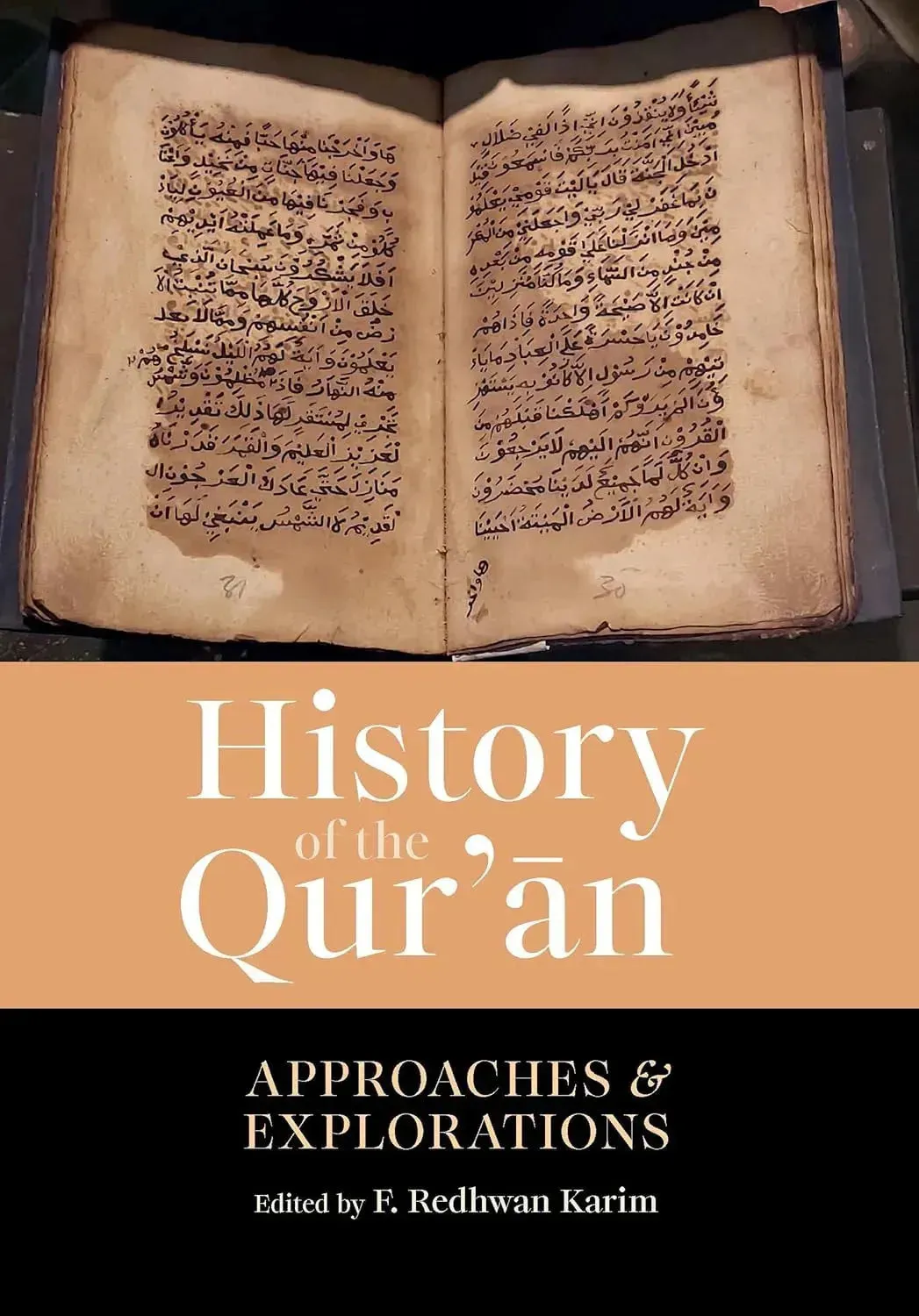
The Qur’ān is the sacred religious book of Muslims around the world. Yet its history, from its inception in seventh-century Arabia to its transmission in the modern world, remains understudied. The twelve chapters in this book address this lacuna by examining multifaceted stages in the Qur’ān’s history and transmission through a broad range of methodological and theoretical approaches.
The volume examines the earliest material evidence of the Qur’ān through its manuscript tradition and explores their content and form. This includes a focus on the Qur’ān’s unique orthography and insights into the Sanaa manuscripts. Additionally, this work provides new insights by broaching upon critical moments in the Qur’ān’s history, such as the codification of Abu Bakr.
A crucial component of the book deals with approaches to the variant readings of the Qur’ān, understood as being sanctioned through narrations on the aḥruf. It explores fresh insights into how Muslim scholars theorised such variances and the way they related them to the qira’āt, including how they approached the variant codices of prominent companions. Furthermore, this work explores understudied non-Qur’ānic transmissions of the Qur’ān alongside the historical development of Qur’ān translations.
This volume advances the field of Qur’ānic studies and Qur’ānic history.
About The Author
Redhwan Karim is Lecturer in Islamic Studies and Course Leader for the B.A Islamic Studies program at the Markfield Institute of Higher Education, UK. He completed his PhD at SOAS, University of London in Islamic Studies and has published on Qur’anic Studies, Islamic Intellectual History, and Arabic Codicology.
Product Information
Product Information
Shipping & Returns
Shipping & Returns

History of the Quran: Approaches & Explorations
History of the Quran: Approaches & Explorations
About The Book
The Qur’ān is the sacred religious book of Muslims around the world. Yet its history, from its inception in seventh-century Arabia to its transmission in the modern world, remains understudied. The twelve chapters in this book address this lacuna by examining multifaceted stages in the Qur’ān’s history and transmission through a broad range of methodological and theoretical approaches.
The volume examines the earliest material evidence of the Qur’ān through its manuscript tradition and explores their content and form. This includes a focus on the Qur’ān’s unique orthography and insights into the Sanaa manuscripts. Additionally, this work provides new insights by broaching upon critical moments in the Qur’ān’s history, such as the codification of Abu Bakr.
A crucial component of the book deals with approaches to the variant readings of the Qur’ān, understood as being sanctioned through narrations on the aḥruf. It explores fresh insights into how Muslim scholars theorised such variances and the way they related them to the qira’āt, including how they approached the variant codices of prominent companions. Furthermore, this work explores understudied non-Qur’ānic transmissions of the Qur’ān alongside the historical development of Qur’ān translations.
This volume advances the field of Qur’ānic studies and Qur’ānic history.
About The Author
Redhwan Karim is Lecturer in Islamic Studies and Course Leader for the B.A Islamic Studies program at the Markfield Institute of Higher Education, UK. He completed his PhD at SOAS, University of London in Islamic Studies and has published on Qur’anic Studies, Islamic Intellectual History, and Arabic Codicology.
Original: $25.95
-65%$25.95
$9.08Product Information
Product Information
Shipping & Returns
Shipping & Returns
Description
About The Book
The Qur’ān is the sacred religious book of Muslims around the world. Yet its history, from its inception in seventh-century Arabia to its transmission in the modern world, remains understudied. The twelve chapters in this book address this lacuna by examining multifaceted stages in the Qur’ān’s history and transmission through a broad range of methodological and theoretical approaches.
The volume examines the earliest material evidence of the Qur’ān through its manuscript tradition and explores their content and form. This includes a focus on the Qur’ān’s unique orthography and insights into the Sanaa manuscripts. Additionally, this work provides new insights by broaching upon critical moments in the Qur’ān’s history, such as the codification of Abu Bakr.
A crucial component of the book deals with approaches to the variant readings of the Qur’ān, understood as being sanctioned through narrations on the aḥruf. It explores fresh insights into how Muslim scholars theorised such variances and the way they related them to the qira’āt, including how they approached the variant codices of prominent companions. Furthermore, this work explores understudied non-Qur’ānic transmissions of the Qur’ān alongside the historical development of Qur’ān translations.
This volume advances the field of Qur’ānic studies and Qur’ānic history.
About The Author
Redhwan Karim is Lecturer in Islamic Studies and Course Leader for the B.A Islamic Studies program at the Markfield Institute of Higher Education, UK. He completed his PhD at SOAS, University of London in Islamic Studies and has published on Qur’anic Studies, Islamic Intellectual History, and Arabic Codicology.