The 'Negro' in Arab-Muslim Consciousness
About The Book
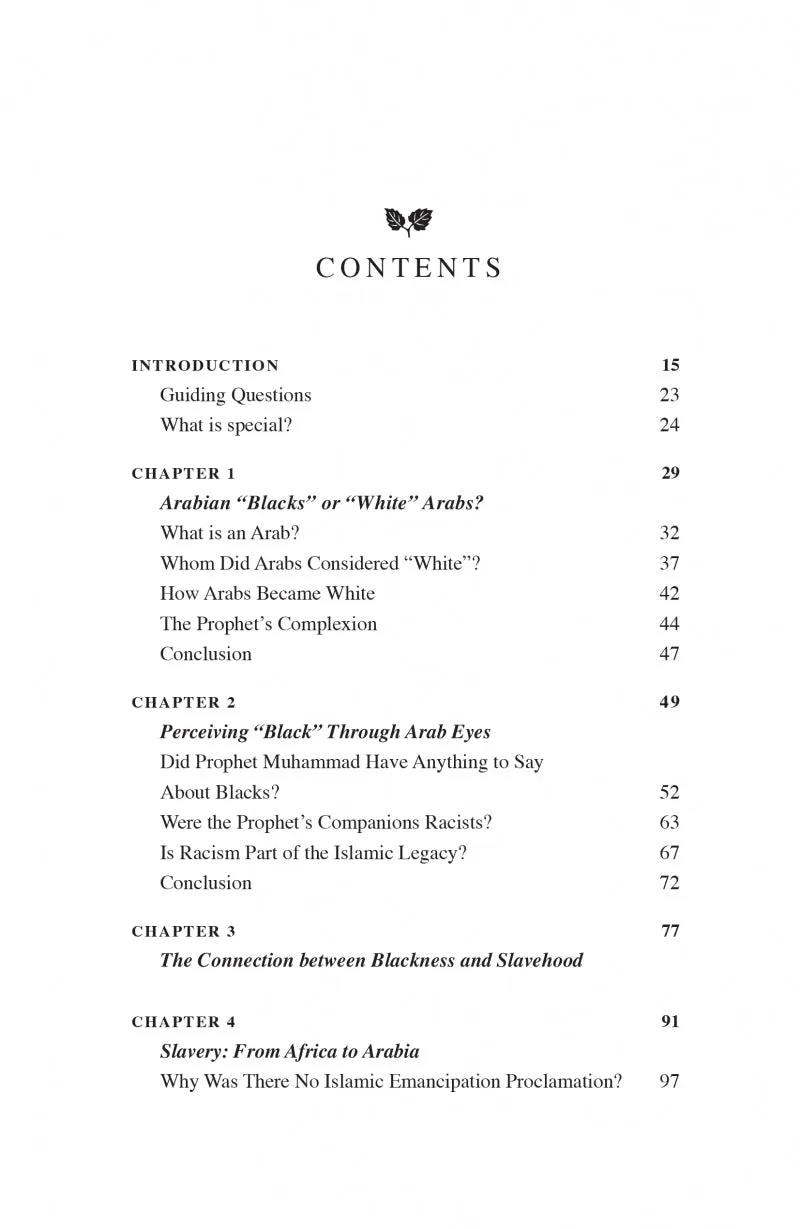
What is the ‘negro’? Who qualifies? What is its Arabic equivalent? And, what did pre-modern writers mean by it? There is a common belief that the ‘negro’ refers to any “black” person of sub-Saharan African heritage. Historians, however, often differentiate between the Moor, the Nubian, the Ethiopian, the Kushite, and the Negro. Why this distinction if all “black” Africans and those of African heritage presumably belong to a common pedigree?
This book’s author, Dr. Abdullah bin Hamid Ali, argues that the ‘Negro’ or ‘Zanj’ as perceived by premodern Arab historians, theologians, and jurists was not only a geographical population. It was also one perceived to be culturally inferior to all other known ‘races.’ For Arab climatic theorists like Al-Mas’udi and Ibn Khaldun, this phenomenon could easily be explained by the fact that the ‘Negroes’ (al-Zunuj) lived at the extreme southern regions of the Earth which brought with it a lack of industriousness and urbanisation (‘umran) similar to what one might find as he/she travels closer to civilisation’s center, the Mediterranean.
A particular aim of this work is to underscore how racial conceptions and perceptions can and have influenced aesthetic standards, social inclusion, and legal norms. The work also demands that its reader reconsider any preset ideas about reified races, which contributes to confusion about the dynamics of race and racism in current times.
About The Author
Abdullah bin Hamid Ali is the Founding Director of the Lamppost Education Initiative. He serves as an assistant professor of Islamic law and Prophetic Tradition at Zaytuna College in Berkeley, California (2007-present). He holds a PhD. in Cultural and Historical Studies in Religion (2016) and an MA in Ethics and Social Theory (2012) from the Graduate Theological Union.
He obtained his BA (ijaza ‘ulya) in Islamic Law (Shariah) from the prestigious Al-Qarawiyin University of Fes, Morocco in 2001. He also served as full time Islamic chaplain at the State Correctional Institute of Chester, PA from 2002-2007. His research interests include the interconnection between law and identity formation, comparative Islamic law, and Islam’s role in the modern world.
Product Information
Product Information
Shipping & Returns
Shipping & Returns



The 'Negro' in Arab-Muslim Consciousness
The 'Negro' in Arab-Muslim Consciousness
About The Book
What is the ‘negro’? Who qualifies? What is its Arabic equivalent? And, what did pre-modern writers mean by it? There is a common belief that the ‘negro’ refers to any “black” person of sub-Saharan African heritage. Historians, however, often differentiate between the Moor, the Nubian, the Ethiopian, the Kushite, and the Negro. Why this distinction if all “black” Africans and those of African heritage presumably belong to a common pedigree?
This book’s author, Dr. Abdullah bin Hamid Ali, argues that the ‘Negro’ or ‘Zanj’ as perceived by premodern Arab historians, theologians, and jurists was not only a geographical population. It was also one perceived to be culturally inferior to all other known ‘races.’ For Arab climatic theorists like Al-Mas’udi and Ibn Khaldun, this phenomenon could easily be explained by the fact that the ‘Negroes’ (al-Zunuj) lived at the extreme southern regions of the Earth which brought with it a lack of industriousness and urbanisation (‘umran) similar to what one might find as he/she travels closer to civilisation’s center, the Mediterranean.
A particular aim of this work is to underscore how racial conceptions and perceptions can and have influenced aesthetic standards, social inclusion, and legal norms. The work also demands that its reader reconsider any preset ideas about reified races, which contributes to confusion about the dynamics of race and racism in current times.
About The Author
Abdullah bin Hamid Ali is the Founding Director of the Lamppost Education Initiative. He serves as an assistant professor of Islamic law and Prophetic Tradition at Zaytuna College in Berkeley, California (2007-present). He holds a PhD. in Cultural and Historical Studies in Religion (2016) and an MA in Ethics and Social Theory (2012) from the Graduate Theological Union.
He obtained his BA (ijaza ‘ulya) in Islamic Law (Shariah) from the prestigious Al-Qarawiyin University of Fes, Morocco in 2001. He also served as full time Islamic chaplain at the State Correctional Institute of Chester, PA from 2002-2007. His research interests include the interconnection between law and identity formation, comparative Islamic law, and Islam’s role in the modern world.
Product Information
Product Information
Shipping & Returns
Shipping & Returns
Description
About The Book
What is the ‘negro’? Who qualifies? What is its Arabic equivalent? And, what did pre-modern writers mean by it? There is a common belief that the ‘negro’ refers to any “black” person of sub-Saharan African heritage. Historians, however, often differentiate between the Moor, the Nubian, the Ethiopian, the Kushite, and the Negro. Why this distinction if all “black” Africans and those of African heritage presumably belong to a common pedigree?
This book’s author, Dr. Abdullah bin Hamid Ali, argues that the ‘Negro’ or ‘Zanj’ as perceived by premodern Arab historians, theologians, and jurists was not only a geographical population. It was also one perceived to be culturally inferior to all other known ‘races.’ For Arab climatic theorists like Al-Mas’udi and Ibn Khaldun, this phenomenon could easily be explained by the fact that the ‘Negroes’ (al-Zunuj) lived at the extreme southern regions of the Earth which brought with it a lack of industriousness and urbanisation (‘umran) similar to what one might find as he/she travels closer to civilisation’s center, the Mediterranean.
A particular aim of this work is to underscore how racial conceptions and perceptions can and have influenced aesthetic standards, social inclusion, and legal norms. The work also demands that its reader reconsider any preset ideas about reified races, which contributes to confusion about the dynamics of race and racism in current times.
About The Author
Abdullah bin Hamid Ali is the Founding Director of the Lamppost Education Initiative. He serves as an assistant professor of Islamic law and Prophetic Tradition at Zaytuna College in Berkeley, California (2007-present). He holds a PhD. in Cultural and Historical Studies in Religion (2016) and an MA in Ethics and Social Theory (2012) from the Graduate Theological Union.
He obtained his BA (ijaza ‘ulya) in Islamic Law (Shariah) from the prestigious Al-Qarawiyin University of Fes, Morocco in 2001. He also served as full time Islamic chaplain at the State Correctional Institute of Chester, PA from 2002-2007. His research interests include the interconnection between law and identity formation, comparative Islamic law, and Islam’s role in the modern world.

