The Virtues of Seclusion in Times of Confusion
About The Book
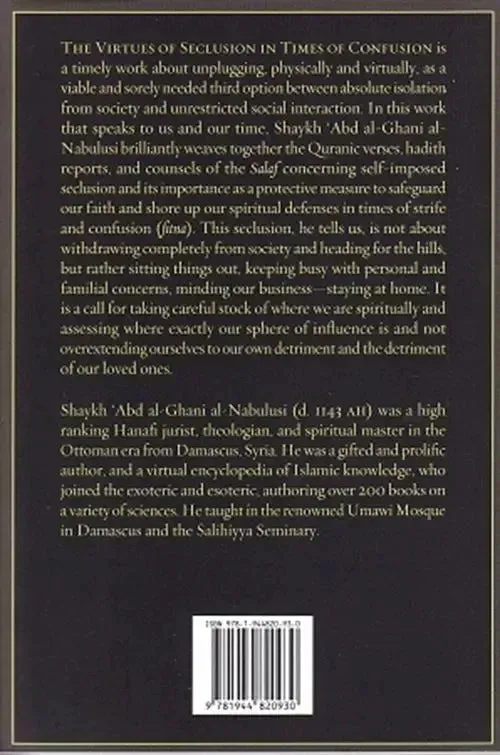
The Virtues of Seclusion in Times of Confusion is a timely work about unplugging, physically and virtually, as a viable and sorely needed third option between absolute isolation from society and unrestricted social interaction. In this work that speaks to us and our time, Shaykh ‘Abd al-Ghani al-Nabulusi brilliantly weaves together the Quranic verses, hadith reports, and counsels of the Salaf concerning self-imposed seclusion and its importance as a protective measure to safeguard our faith and shore up our spiritual defenses in times of strife and confusion (fitna).
This seclusion, he tells us, is not about withdrawing completely from society and heading for the hills, but rather sitting things out, keeping busy with personal and familial concerns, minding our business—staying at home. It is a call for taking careful stock of where we are spiritually and assessing where exactly our sphere of influence is and not overextending ourselves to our own detriment and the detriment of our loved ones.
“The goal of this book and its fine-tuned translation is to put an exclamation point on the importance of seclusion, and to construct a nuanced and scholarly understanding of the matter. Readers will enjoy, learn, and take examples from the stories of how our predecessors withdrew from societies when they felt their corruption. I pray that this work marks the beginning of our regular practice of retreat—physically and digitally—in a way that makes us more at peace and thus more effective in bringing positive change to ourselves, our families, and our communities.” —Dr. Shadee Elmasry
Contents:
Translator’s Preface
Foreword by Dr. Shadee Elmasry
Biography of Shaykh ‘Abd al-Ghani al-Nabulusi
Introduction
Chapter 1: On Self-imposed Isolation and Avoidance of People During times of Confusion and Strife
Chapter 2: The Legal Dispensation Allowing One to Avoid the “Imams of Fitna” in the Mosques
Chapter 3: How the Early Muslims (Salaf) Were During Periods of Corruption
Chapter 4: Early Imams Who Withdrew from Society
Appendices
Appendix I: Selected Narrations from Ibn Abi al-Dunya’s Kitab al-‘Uzla wa al-Infirad (The Book of Withdrawal and Seclusion)
Appendix II: Selected Narrations from Ibn Abi al-Dunya’s Kitab al-Tawadu’ wa al-Khumul (The Book of Humility and Obscurity)
About The Author
Shaykh ‘Abd al-Ghani al-Nabulusi (d. 1143 ah) was a high ranking Hanafi jurist, theologian, and spiritual master in the Ottoman era from Damascus, Syria. He was a gifted and prolific author, and a virtual encyclopedia of Islamic knowledge, who joined the exoteric and esoteric, authoring over 200 book on a variety of sciences. He taught in the renowned Umawi Mosque in Damascus and the Salihiyya Seminary.
Product Information
Product Information
Shipping & Returns
Shipping & Returns
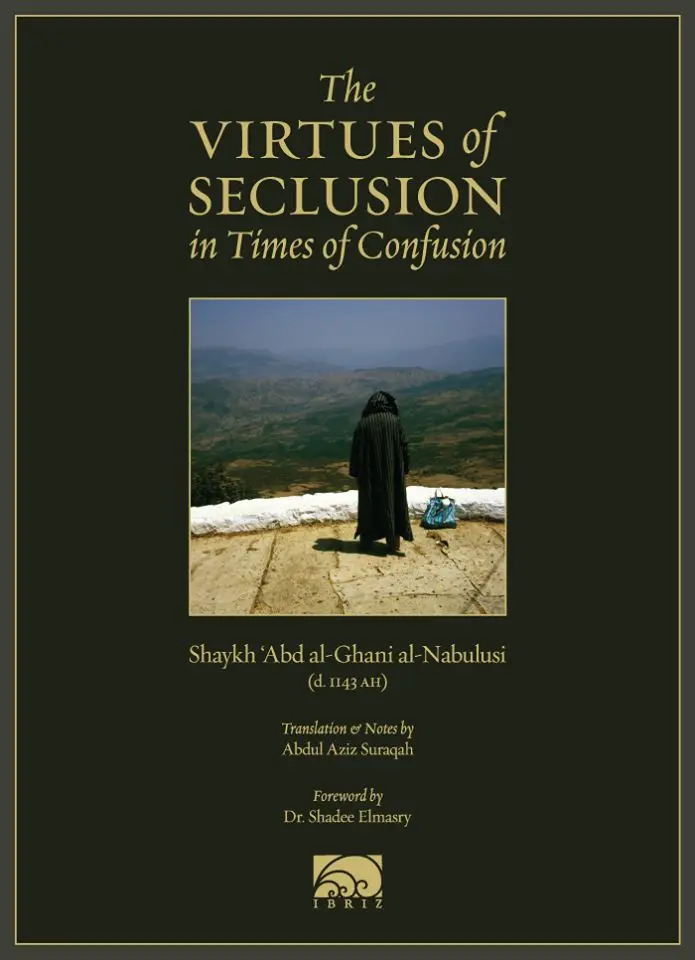
The Virtues of Seclusion in Times of Confusion
The Virtues of Seclusion in Times of Confusion
About The Book
The Virtues of Seclusion in Times of Confusion is a timely work about unplugging, physically and virtually, as a viable and sorely needed third option between absolute isolation from society and unrestricted social interaction. In this work that speaks to us and our time, Shaykh ‘Abd al-Ghani al-Nabulusi brilliantly weaves together the Quranic verses, hadith reports, and counsels of the Salaf concerning self-imposed seclusion and its importance as a protective measure to safeguard our faith and shore up our spiritual defenses in times of strife and confusion (fitna).
This seclusion, he tells us, is not about withdrawing completely from society and heading for the hills, but rather sitting things out, keeping busy with personal and familial concerns, minding our business—staying at home. It is a call for taking careful stock of where we are spiritually and assessing where exactly our sphere of influence is and not overextending ourselves to our own detriment and the detriment of our loved ones.
“The goal of this book and its fine-tuned translation is to put an exclamation point on the importance of seclusion, and to construct a nuanced and scholarly understanding of the matter. Readers will enjoy, learn, and take examples from the stories of how our predecessors withdrew from societies when they felt their corruption. I pray that this work marks the beginning of our regular practice of retreat—physically and digitally—in a way that makes us more at peace and thus more effective in bringing positive change to ourselves, our families, and our communities.” —Dr. Shadee Elmasry
Contents:
Translator’s Preface
Foreword by Dr. Shadee Elmasry
Biography of Shaykh ‘Abd al-Ghani al-Nabulusi
Introduction
Chapter 1: On Self-imposed Isolation and Avoidance of People During times of Confusion and Strife
Chapter 2: The Legal Dispensation Allowing One to Avoid the “Imams of Fitna” in the Mosques
Chapter 3: How the Early Muslims (Salaf) Were During Periods of Corruption
Chapter 4: Early Imams Who Withdrew from Society
Appendices
Appendix I: Selected Narrations from Ibn Abi al-Dunya’s Kitab al-‘Uzla wa al-Infirad (The Book of Withdrawal and Seclusion)
Appendix II: Selected Narrations from Ibn Abi al-Dunya’s Kitab al-Tawadu’ wa al-Khumul (The Book of Humility and Obscurity)
About The Author
Shaykh ‘Abd al-Ghani al-Nabulusi (d. 1143 ah) was a high ranking Hanafi jurist, theologian, and spiritual master in the Ottoman era from Damascus, Syria. He was a gifted and prolific author, and a virtual encyclopedia of Islamic knowledge, who joined the exoteric and esoteric, authoring over 200 book on a variety of sciences. He taught in the renowned Umawi Mosque in Damascus and the Salihiyya Seminary.
Product Information
Product Information
Shipping & Returns
Shipping & Returns
Description
About The Book
The Virtues of Seclusion in Times of Confusion is a timely work about unplugging, physically and virtually, as a viable and sorely needed third option between absolute isolation from society and unrestricted social interaction. In this work that speaks to us and our time, Shaykh ‘Abd al-Ghani al-Nabulusi brilliantly weaves together the Quranic verses, hadith reports, and counsels of the Salaf concerning self-imposed seclusion and its importance as a protective measure to safeguard our faith and shore up our spiritual defenses in times of strife and confusion (fitna).
This seclusion, he tells us, is not about withdrawing completely from society and heading for the hills, but rather sitting things out, keeping busy with personal and familial concerns, minding our business—staying at home. It is a call for taking careful stock of where we are spiritually and assessing where exactly our sphere of influence is and not overextending ourselves to our own detriment and the detriment of our loved ones.
“The goal of this book and its fine-tuned translation is to put an exclamation point on the importance of seclusion, and to construct a nuanced and scholarly understanding of the matter. Readers will enjoy, learn, and take examples from the stories of how our predecessors withdrew from societies when they felt their corruption. I pray that this work marks the beginning of our regular practice of retreat—physically and digitally—in a way that makes us more at peace and thus more effective in bringing positive change to ourselves, our families, and our communities.” —Dr. Shadee Elmasry
Contents:
Translator’s Preface
Foreword by Dr. Shadee Elmasry
Biography of Shaykh ‘Abd al-Ghani al-Nabulusi
Introduction
Chapter 1: On Self-imposed Isolation and Avoidance of People During times of Confusion and Strife
Chapter 2: The Legal Dispensation Allowing One to Avoid the “Imams of Fitna” in the Mosques
Chapter 3: How the Early Muslims (Salaf) Were During Periods of Corruption
Chapter 4: Early Imams Who Withdrew from Society
Appendices
Appendix I: Selected Narrations from Ibn Abi al-Dunya’s Kitab al-‘Uzla wa al-Infirad (The Book of Withdrawal and Seclusion)
Appendix II: Selected Narrations from Ibn Abi al-Dunya’s Kitab al-Tawadu’ wa al-Khumul (The Book of Humility and Obscurity)
About The Author
Shaykh ‘Abd al-Ghani al-Nabulusi (d. 1143 ah) was a high ranking Hanafi jurist, theologian, and spiritual master in the Ottoman era from Damascus, Syria. He was a gifted and prolific author, and a virtual encyclopedia of Islamic knowledge, who joined the exoteric and esoteric, authoring over 200 book on a variety of sciences. He taught in the renowned Umawi Mosque in Damascus and the Salihiyya Seminary.